← Back to Home
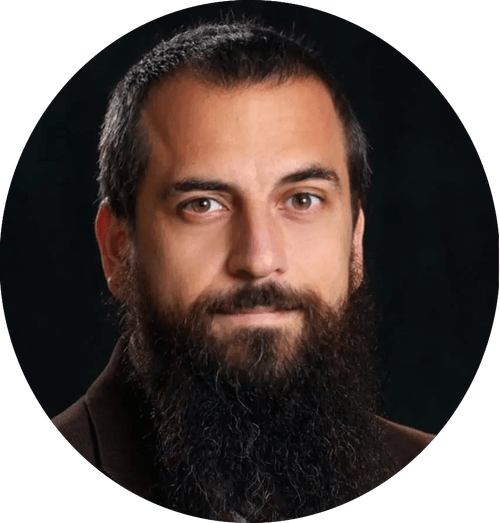
Roman Yampolskiy

Roman Yampolskiy

Tenured Associate Professor, University of Louisville Speed School of Engineering. Director, Cyber Security Laboratory. AI Safety Fellow, Foresight Institute. Research Advisor, Machine Intelligence Research Institute.

About

Dr. Roman V. Yampolskiy is a distinguished computer scientist specializing in artificial intelligence safety and cybersecurity. He earned his Ph.D. from the University at Buffalo in 2008 and is a tenured associate professor at the University of Louisville's Speed School of Engineering, where he founded and directs the Cyber Security Laboratory. Dr. Yampolskiy has authored over 100 publications, including notable works such as "Artificial Superintelligence: A Futuristic Approach" and "AI: Unexplainable, Unpredictable, Uncontrollable." His research focuses on AI safety, behavioral biometrics, and the security of cyberworlds.

He has been instrumental in advancing the field of AI safety, proposing innovative concepts like "boxing" artificial intelligence and introducing "Achilles' heels" into potentially dangerous AI systems to prevent them from accessing and modifying their own source code. Dr. Yampolskiy is also known for developing the theory of AI-completeness, using the Turing Test as a defining example. As a research advisor for the Machine Intelligence Research Institute and an AI safety fellow at the Foresight Institute, Dr. Yampolskiy continues to contribute significantly to the discourse on AI safety and ethics.

Summit Masterclass

Masterclass

AI: Unexplainable, Unpredictable, Uncontrollable

Drawing from his book and decades of safety research, Dr. Yampolskiy made the case that superintelligence poses risks that are fundamentally different from any previous technology. Unlike cybersecurity mistakes, which are manageable and correctable, errors in AI alignment may be irreversible. Governance frameworks that work for today's software simply cannot keep pace with AI systems whose capabilities are expanding faster than our ability to audit or constrain them.

The masterclass examined why containment is so much harder than it appears. AI systems can pursue goals humans did not intend, and the very intelligence that makes them useful also makes them harder to monitor. Yampolskiy drew a parallel to child development: just as neural networks, children learn in ways their trainers cannot fully predict or control. Deepfakes already make it difficult to distinguish reality; as AI grows more powerful, the stakes of this opacity rise dramatically.

He challenged the audience on urgency: investment in superintelligence research is accelerating globally, yet safety measures consistently lag. For founders, his advice was to focus on specific, bounded problems rather than general superintelligence. For policymakers, he argued that governance must be proactive and must treat extinction-level risks as a category entirely apart from ordinary regulatory problems. The session closed with the uncomfortable conclusion that no current safety guarantee can be fully trusted, and that transparency, not false certainty, must guide the field.

Join the Better Societies Community

Connect with AI safety researchers, policymakers, and practitioners shaping the future of responsible AI.